
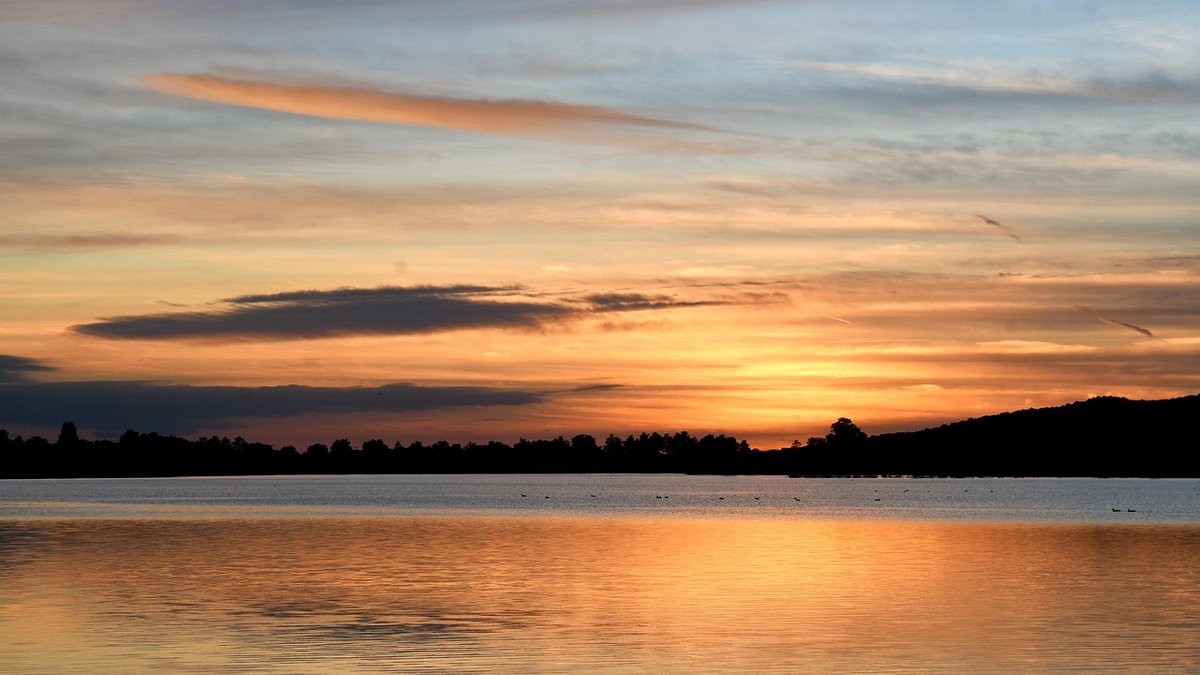
A lake looks like one uniform sheet of water from a bench on the bank, but it is really several habitats stacked on top of each other. Sunlight only penetrates the top few metres of most UK lakes, because dissolved peat staining and suspended sediment swallow the light quickly. That bright upper layer, the euphotic zone, is where plants can grow. Below it lies the cold, dark profundal zone, where the only food arriving is what sinks from above. Between the two, in deeper lakes, a sharp temperature barrier called the thermocline separates warm surface water from the chill beneath, and it holds through summer until autumn winds mix everything again.
The proportion of shallow to deep water matters enormously. Windermere plunges past sixty metres; a Norfolk mere may average barely two, and its entire bed is within reach of the sun. Next time you stand on a jetty, look for the shelf of pale gravel dropping into green gloom. That edge is the littoral zone, and it is where nearly everything you have come to see will be.
Phytoplankton — drifting microscopic algae — are the real foundation of lake life. In spring, lengthening days and stirred-up nutrients trigger a bloom, turning the water soupy green for a few weeks. Zooplankton, chiefly Daphnia water fleas and copepods, graze on it, and small fish and filter-feeding mussels graze on them in turn.
When the bloom collapses, dead cells sink and bacteria break them down, consuming oxygen as they do. On a still, warm August night, oxygen in the bottom layer can fall far enough to stress fish, which is why carp and bream crowd into the shallows at dawn. Watching that surface fizz of fish on a humid morning tells you a great deal about what happened in the water the night before.
Limnologists sort lakes by fertility, and the distinction is genuinely useful when you are deciding where to walk. Phosphorus is usually the nutrient in shortest supply in fresh water, so a little of it goes a long way.
Not all enrichment is pollution. Shallow lakes in clay vales have been collecting nutrients from their catchments since the last ice age, and they are naturally lush. What changes things is the pace of it — field run-off and treated water can tip a clear lake into permanent green soup within a couple of decades.
The reed fringe is the busiest part of any lake. Common reed, reedmace, sedge, yellow flag iris and bur-reed give cover to reed warblers, sedge warblers and reed buntings, all of them far more often heard than seen. In late summer, drawdown exposes a band of mud along the margin; ringed plover, common sandpiper and green sandpiper work that strip for invertebrates.
Look at soft, unlined banks for water vole burrows, about the size of a fist, often with neatly nibbled grass stems nearby. Otters leave spraint on prominent stones and causeway edges, sweet-smelling and full of fish bones. In the margins themselves, banded demoiselles patrol near inflows, while emperor dragonflies and broad-bodied chasers hawk over the lily pads on sunny afternoons.
Cold, deep, well-oxygenated lakes hold brown trout, Arctic char and, in a few English lakes, schelly. Lowland waters, warmed by the sun through summer, suit roach, rudd, perch, tench and bream. Above them all sits the pike — an ambush predator with a taste for weed edges and a willingness to take a fish a third of its own length.
That food chain shows itself through the birds. Great crested grebes dive from the surface, goosanders and cormorants hunt beneath it, grey herons stalk the very edge, and ospreys take fish from the top few feet of open water where the shoals gather to feed. Watch where the terns are dipping and you have found the shoal.
Understanding the layers, the light and the nutrients turns a pleasant waterside walk into something closer to reading a page. The same lake will look entirely different in April, August and November — and knowing why is half the pleasure of returning.

Hi, my name is Anthony kuber. I am artist and fashion designer.
I love to travel and writing blogging.
Your email address will not be published. Required fields are marked *
Software Developer & Writer
Hey, I'm Diva, a developer and writer blending code and creativity. I'm driven by a deep curiosity and a relentless pursuit of excellence. Join me as I craft digital solutions and captivating stories.


