
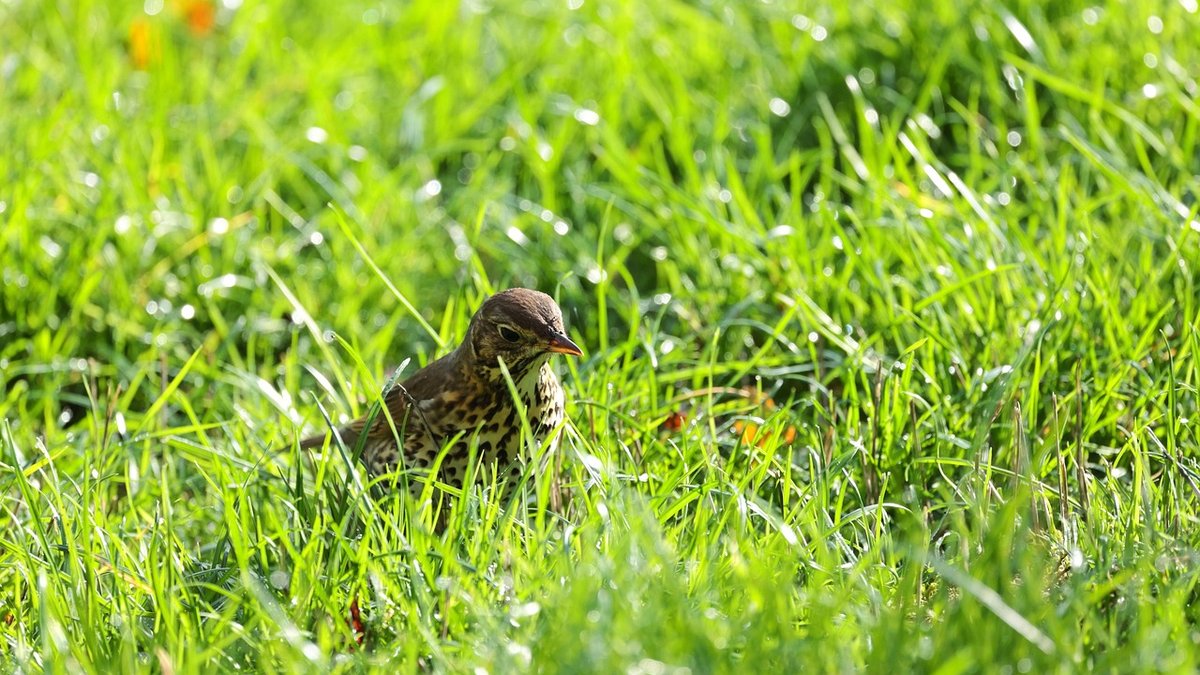
Most of us arrive at a lake at speed. We park, we stride off, we scan the far bank for something rare. Try the opposite. Find a bench, a jetty end, or a dry tussock of grass, and sit down for ten minutes with nothing to do. Let your breathing slow — in for four, out for six — and notice how the water is never quite still. That first quiet quarter of an hour is usually the most productive of the whole visit, because birds respond to stillness. A heron will tolerate a seated human at forty paces; it will not tolerate a walker in a rustling coat.
Take a flask. Wear one more layer than you think you need, because sitting is colder than walking. Leave the phone in your pocket unless you are genuinely using it to check a bird call.
The surface of a lake is a page of information, and you can learn to read it in an afternoon. A flat, silver sheet means little wind, which means reflections are sharp and birds are easy to follow. Wait for a patch of rings opening outwards with no bird visible — that is usually a diving duck or a fish, and if you keep watching, the owner will surface a few metres away. Long, streaky lanes of ripple are wind lanes, where insects collect and swallows and martins hunt.
Light matters as much as the birds. Early morning and the last hour before dusk give you low, warm light that catches the breast of a robin or the bronze head of a mallard. Side light shows plumage detail; backlight turns everything into elegant silhouette. A pair of polarising sunglasses, or binoculars with good glare control, will cut the shine off the water and let you see beneath the surface film.
You do not need a long lens or a lifetime list to enjoy this. These are the characters you are most likely to meet:
Pick a short stretch rather than a long circuit. A mile or two of bank, walked slowly with a sit in the middle, will show you more than five miles at a march. Look for paths with a boardwalk or a hide — these get you over wet ground and into the reeds without trampling anything. Upland tarns give you big skies and waders; lowland meres give you reedbeds, willows, and more ducks than you can count.
Go early, and if you want real quiet, avoid weekend middays. In spring and summer, keep to the path and keep dogs close near the water's edge — gravel shores and grassy margins are exactly where ground-nesting birds such as terns and grebes make their scrapes. A single loose dog can clear a whole bay of birds. If you find a nest, back away and tell no one except the site warden.
Try this the next time you reach a quiet bank:
That is all. No target species, no ticking. The calm comes from attention, not from a list, and the birds have a way of arriving just as you stop trying.
Take binoculars (8x42 is the sensible all-rounder), a waterproof, a flask, and a small notebook. In Scottish and northern summers, midge repellent earns its place. Leave the drone at home, never play recorded birdsong to lure a bird closer, and do not feed bread to wildfowl — it fouls the water and damages their health. Take all litter home, close gates behind you, and give any bird that looks alarmed a wider berth than you think it needs. The lake will be here next week, and so will the grebes. Go slowly, and let the water do the rest.

Hi, my name is Anthony kuber. I am artist and fashion designer.
I love to travel and writing blogging.
Your email address will not be published. Required fields are marked *
Software Developer & Writer
Hey, I'm Diva, a developer and writer blending code and creativity. I'm driven by a deep curiosity and a relentless pursuit of excellence. Join me as I craft digital solutions and captivating stories.


