
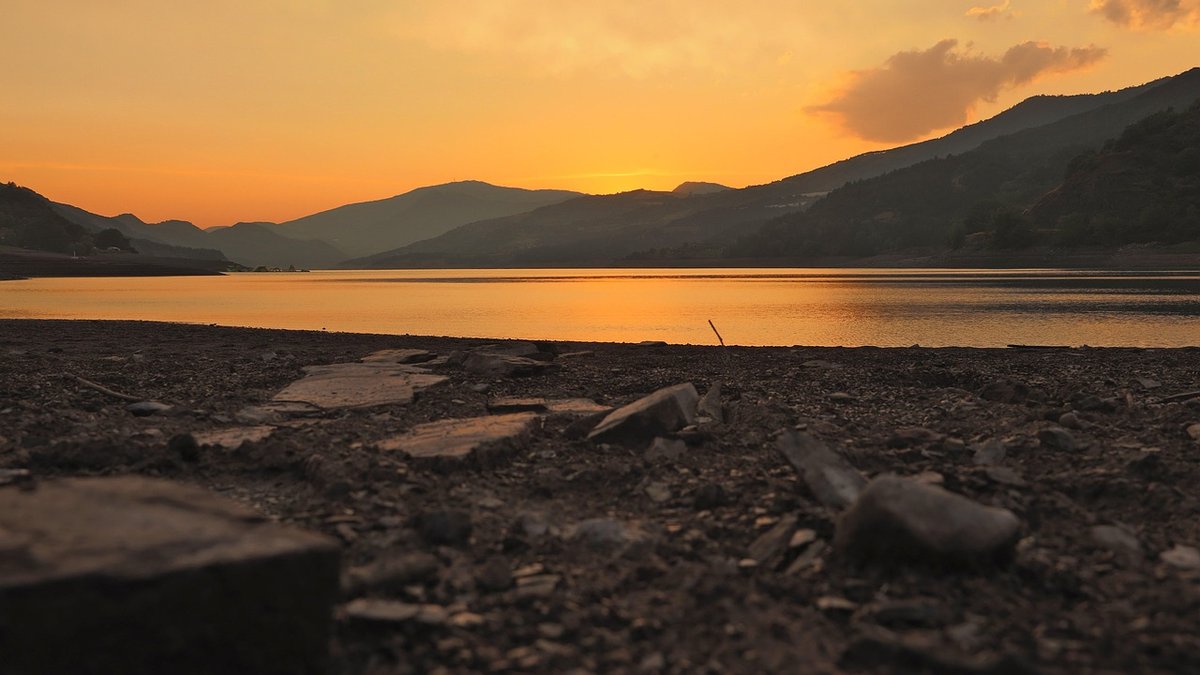
Half seven on the bank of a lowland mere, a light drizzle drifting across the water, a lingering mist, and forty-odd gadwall to count before they drift behind the reeds. It is exactly the moment you reach for a notebook, and exactly the moment a notebook gives up on you. Damp trouser pockets, wet hands, a hide bench that has been rained on since Tuesday, and the odd spot of mud where you slipped on the approach path — that is the working environment for field notes in Britain.
Wet paper is not merely an inconvenience. Ink bleeds, pages weld themselves together, pencil lifts off in a grey smear, and by the time you get home you are left guessing whether you recorded fourteen or forty. Over the past few weeks I have been carrying four different approaches to a handful of reservoirs, gravel pits and one gloriously muddy lake, and subjecting each of them to the same treatment. Here is what survived.
Each went into a different pocket so I could not muddle them, and each was used for real records rather than nonsense scribbles — counts, plumage notes, times, and the direction birds moved along the shore.
I wanted conditions that anyone would meet on an ordinary morning out, not a laboratory. The routine was the same at every site:
The stone-paper pad was untroubled by everything. Rain sat on the surface in beads, mud wiped off with a thumb, and after the immersion test I simply shook it and carried on. Its only real failing is the surface itself — so smooth that a hard pencil skates and a soft one fills in faint grey, so ballpoint is the sensible partner. It also refuses to absorb, which means a wet page will smudge against your sleeve while you write.
The synthetic-sheet book was similarly indifferent to water, and its spiral binding did not rust, unlike the metal-spiralled pad I tried last winter, which left orange freckles across every page. Pencil took reasonably well once I switched to a 2B, and the slightly larger A5 format was a genuine advantage when writing a species list standing up.
The coated notebook was the nicest to write in and the most pleasant to hold, with a page that feels like paper rather than plastic. It shrugged off drizzle and a muddy thumb, and survived its brief dunking without the pages sticking together once I dried it flat. Leave it crumpled in a rucksack, though, and it will cockle.
The laminated cards never failed, because card cannot fail. But a chinagraph is blunt, your handwriting becomes enormous, and you can fit about thirty records on two cards before you are hunting for more.
The notebook is only half the kit. The instrument matters just as much:
Muddy fingers are less of a problem than you would think, provided the page is non-porous. Mud wipes off stone paper and synthetics cleanly; on coated paper it smears and needs to dry before you brush it away, so write around it rather than over it.
For everyday lakeside birding in Britain, a small coated all-weather pad in a chest pocket, with a 2B pencil on a string, covers almost everything. If you are planning a long count in steady rain, or you know you will be wading, take the stone-paper or synthetic book instead and accept that you will be writing in ballpoint.
Two small habits make more difference than the paper: keep the notebook flat against your thigh rather than balanced on a wet rail, and never leave it closed and soaking in a warm car, because that is when pages stick. Keep the record dry enough to read, and the morning’s sightings stay yours.

Hi, my name is Anthony kuber. I am artist and fashion designer.
I love to travel and writing blogging.
Your email address will not be published. Required fields are marked *
Software Developer & Writer
Hey, I'm Diva, a developer and writer blending code and creativity. I'm driven by a deep curiosity and a relentless pursuit of excellence. Join me as I craft digital solutions and captivating stories.


